MOZARTEUMORCHESTER UND LANDESJUGENDORCHESTER
BY HORST REISCHENBÖCK
Dreh Punkt Kultur, November 4, 2010
Old Hands, Young Whippersnappers
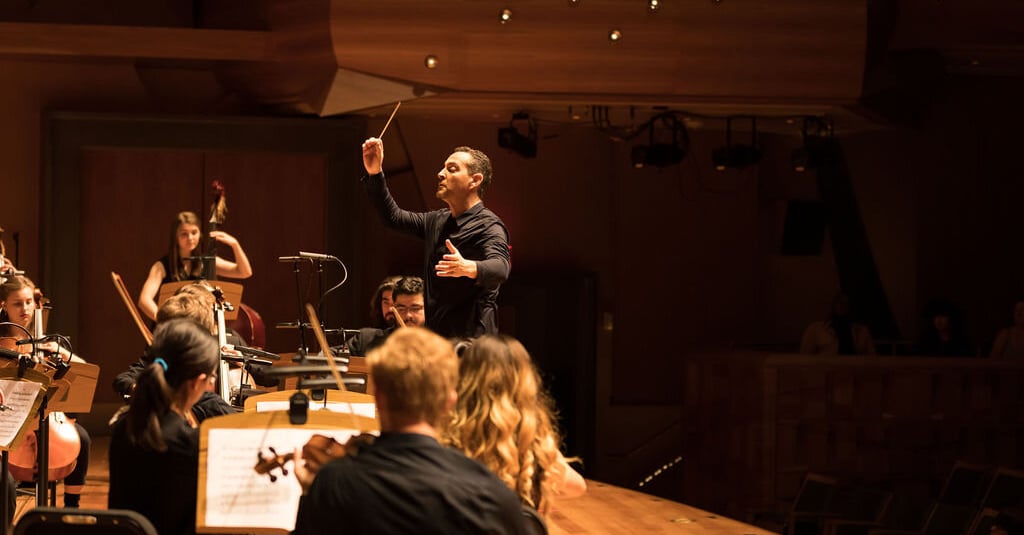
Once a year, the Mozarteum Orchestra of Salzburg and the Salzburg Landesjugendorchester take the stage together for a joint concert. And so it was again on Wednesday, November 11, 2010: The great Festspielhaus was the setting for the “2 Orchestras Project” and a sweeping tour of symphonic dances from around the world.
Seated behind concertmaster Frank Stadler were 21 first violins, the youngsters dominating the scene. The same could be said of the 15 cellos. Bernhard Krabatsch inspired no less than 5 flutes along with half a dozen horns and many percussionists behind.
The latter, interestingly, was not necessarily for the world premiere in the middle of the program: Toshio Hosokawa’s (born 1955 in Hiroshima) Danses Imaginaires II for large orchestra. As the composer himself said, the work is not ‘continental’ in the sense that there exists an expectation of a "bouncing" meter as required for dance, but rather an overall sense of serenity. Musical ‘panels’ move slowly, allowing for pictorial associations in this imaginary dance of meditative quietness while moments of powerful eruptions provide for contrast.
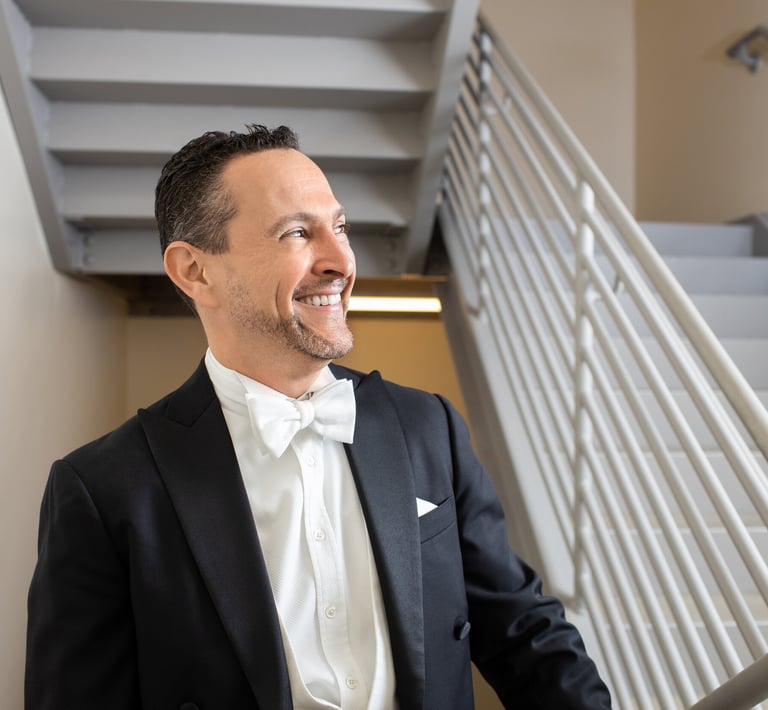
The conductor Daniel Alfred Wachs from the United States was an inspiring advocate, bringing out every detail of the score with precision.
He did not leave any direction to chance in Piotr Ilych Tchaikovsky’s Nutcracker Suite N. 1 Opus 71a. The five “Danses Caracteristiques” – from the Overture and the March to the Waltz of the Flowers – were executed perfectly. Should the Mozarteum Orchestra ever find itself in need of more players, it should ask the Salzburg Landesjugendorchester!
The final work on the program was Leonard Bernstein’s “Symphonic Dances” from the musical West Side Story which the composer himself arranged. Engaging, rhythmically inspired, precise in its execution, the “Mambo” was equal to a performance by Gustavo Dudamel and the Simón Bolívar Youth Orchestra!
The bitter sweet emotions of a belief in a better world were poignantly expressed as well.
There was only one final thing to say following the storm of excitement, a return to calm and to the homeland with the waltz Roses from the South Opus 388, based on motives from the forgotten operetta, “The Queen’s Lace Handkerchief.” Not only did the native musicians prove their affinity for Johann Strauss but so too did the guest conductor from the United States.
In conclusion: An evening that should become a regular part of our cultural landscape.